Why Cappadocia Is Unlike Anywhere Else on Earth
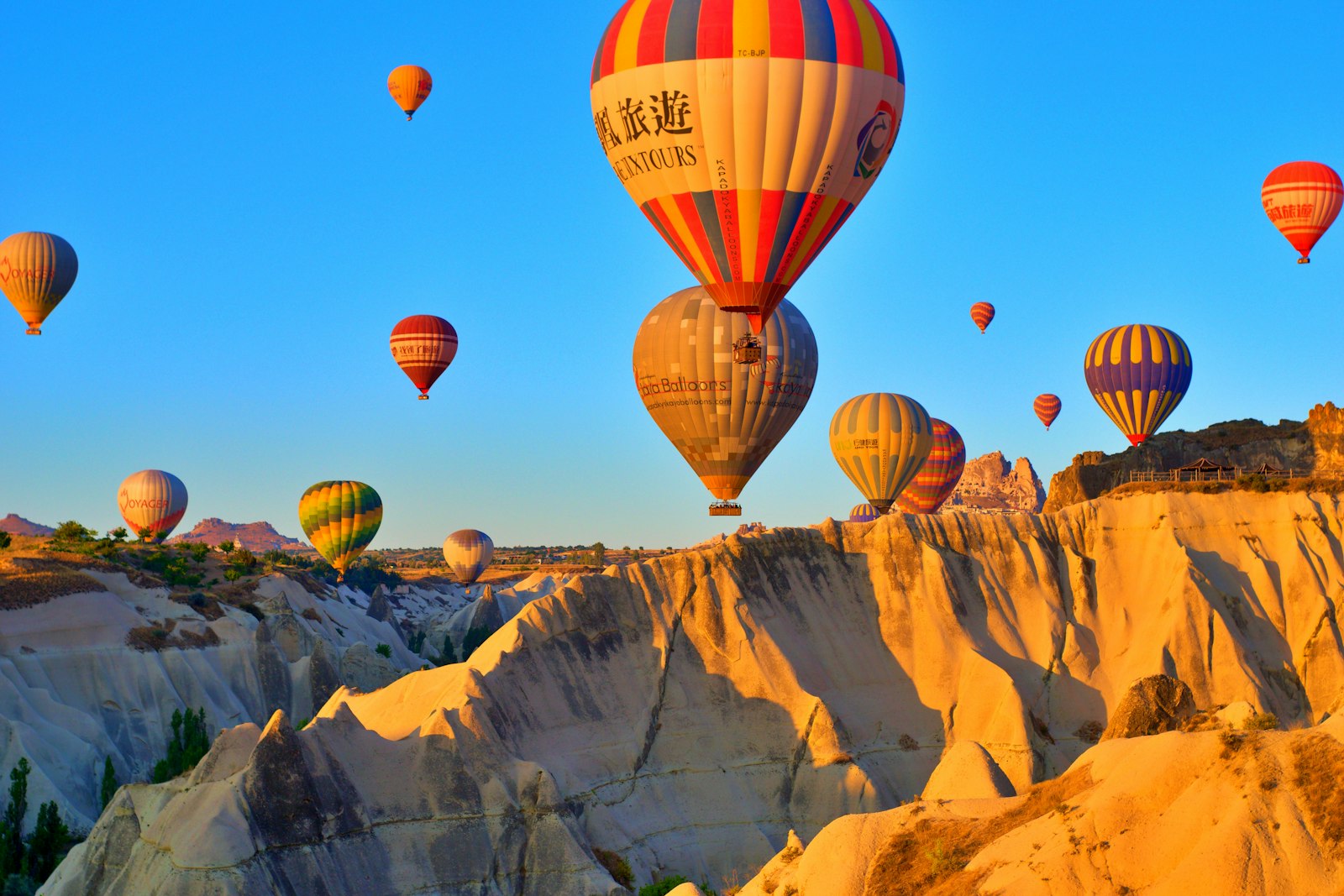
Cappadocia occupies a strange position in the traveller's imagination — it is simultaneously one of the most photographed places on earth and one of the hardest to truly prepare for. No image fully captures the experience of standing in the Rose Valley at dawn as a hundred hot air balloons rise silently from the mist. No travel writing quite conveys what it is to sleep inside a rock face that was first carved into a home some 2,000 years ago. You simply have to go.
The landscape itself is the result of millions of years of geological theatre. Volcanic eruptions from Mount Erciyes and Hasan layered the central Anatolian plateau in soft tuff — a porous volcanic rock that early civilisations discovered could be carved with hand tools. Over millennia, wind and rain sculpted the tuff into the eerie formations known as fairy chimneys: tall, tapering pillars with hard basalt caps, concentrated in valleys with names like Love Valley, Pigeon Valley, and the aptly named Devrent Imagination Valley. Humans began carving into these formations at least in the Hittite period, and the Byzantine-era rock churches and frescoes that survive across the region are among the most important examples of early Christian art anywhere in the world.
The modern cave hotel emerged as an organic evolution of this tradition. Many of the properties listed below occupy carved spaces that have served as homes, storage rooms or stables for centuries — their curved walls and honeycomb architecture representing a form of vernacular design that no contemporary architect could fully replicate. Sleeping in a cave room in Cappadocia is not a gimmick. It is one of the most genuinely extraordinary accommodation experiences available anywhere in the world.
The 6 Best Cave Hotels in Cappadocia
Ranked by overall experience, design quality and authenticity of the cave setting.



The Hot Air Balloon Guide
The balloon flight over Cappadocia is not optional. It is the defining experience of the region and one that has no equivalent anywhere in the world. Approximately 150 balloons launch from the Göreme area each morning at dawn when conditions permit, creating a spectacle that is extraordinary from the ground and transcendent from the air. You will drift silently above the fairy chimneys, watching the valleys fill with light, for approximately one hour.
Prices range from around $150–$250 per person depending on the company, the basket size and whether you opt for a private or shared flight. The main reputable operators are Voyager Balloons, Royal Balloon, Butterfly Balloons and Kapadokya Balloons. All are licensed, well-maintained and experienced — the price difference between operators reflects basket size and service level more than safety variation.
Book well in advance — at least 2–3 months ahead for peak season (April–June, September–October). Flights are weather-dependent and may be cancelled at short notice; reputable operators will offer a refund or reschedule. Budget for at least two possible flight windows in your itinerary to account for cancellations. The experience, when the conditions align, is worth every contingency plan.
Balloon Tips
- Book direct with the operator — third-party booking sites add margin without adding value
- Dress in layers — it is colder at altitude than on the ground, even in summer
- Bring a charged camera — this is not a moment for a flat battery
- Champagne breakfast is served after landing — it is traditional and genuinely excellent
Essential Cappadocia Facts
| Category | Detail |
|---|---|
| Best time to visit | April–June and September–October. Avoids summer heat and winter snow. |
| Best area to stay | Göreme for balloon views and nightlife; Uçhisar for quiet luxury; Ürgüp for restaurant quality. |
| Balloon season | Year-round, but flights are most reliable April–October. Winter fog causes more cancellations. |
| Average temperatures | Spring: 12–20°C | Summer: 25–35°C | Autumn: 10–20°C | Winter: -5–5°C |
| Travel from Istanbul | 1hr 20min flight to Kayseri or Nevşehir; or 11hr overnight bus from Istanbul. |
Frequently Asked Questions
Are the cave rooms cold?
Not if the hotel is properly equipped. Cave rock maintains a remarkably stable temperature year-round — cool in summer (a genuine advantage) and naturally insulated in winter. All the hotels on this list have underfloor heating, fireplaces or both. In shoulder season you may want an extra layer at night, but cold is not a concern at reputable properties.
Is Cappadocia worth it?
Yes — unequivocally. It is one of the few places in the world that exceeds its own considerable hype. The combination of extraordinary landscape, genuine ancient history, excellent food, and the unique experience of sleeping inside carved rock makes it sui generis. There is nowhere quite like it.
When is the best time to go?
April–May and September–October offer the ideal combination of comfortable temperatures, reliable balloon weather and manageable crowds. July–August is very hot and extremely busy. Winter has its charms — snow on the fairy chimneys is spectacular — but expect more balloon cancellations and some restaurant closures.
How long should I stay?
A minimum of 3 nights is strongly recommended. Day 1: arrive, settle in, sunset from a terrace. Day 2: balloon flight at dawn, Göreme Open Air Museum, Rose Valley hike. Day 3: Derinkuyu or Kaymaklı underground city, wine tasting, evening restaurant. Three nights is the minimum to do the place justice; five to seven allows you to properly slow down, explore the more remote valleys, and enjoy the atmosphere fully.